9/11 25th Anniversary Travel Guide 2026: How Airport Security Changed, Where to Honor the Anniversary, and What to Expect at Airports This Week
If you’re flying this week, expect longer TSA lines, extra screening, and a heavier security posture at major airports — the 25th anniversary of 9/11 falls on a Friday this year, and the Transportation Security Administration (TSA) is running heightened operations through the weekend. Security checkpoints that once took 10 minutes now routinely take 30 to 45 minutes at hubs like JFK, LAX, ORD, and ATL. If you’re traveling to a memorial site, add another 60 to 90 minutes for parking and crowd control at places like the 9/11 Memorial in Lower Manhattan and the Pentagon Memorial in Arlington.
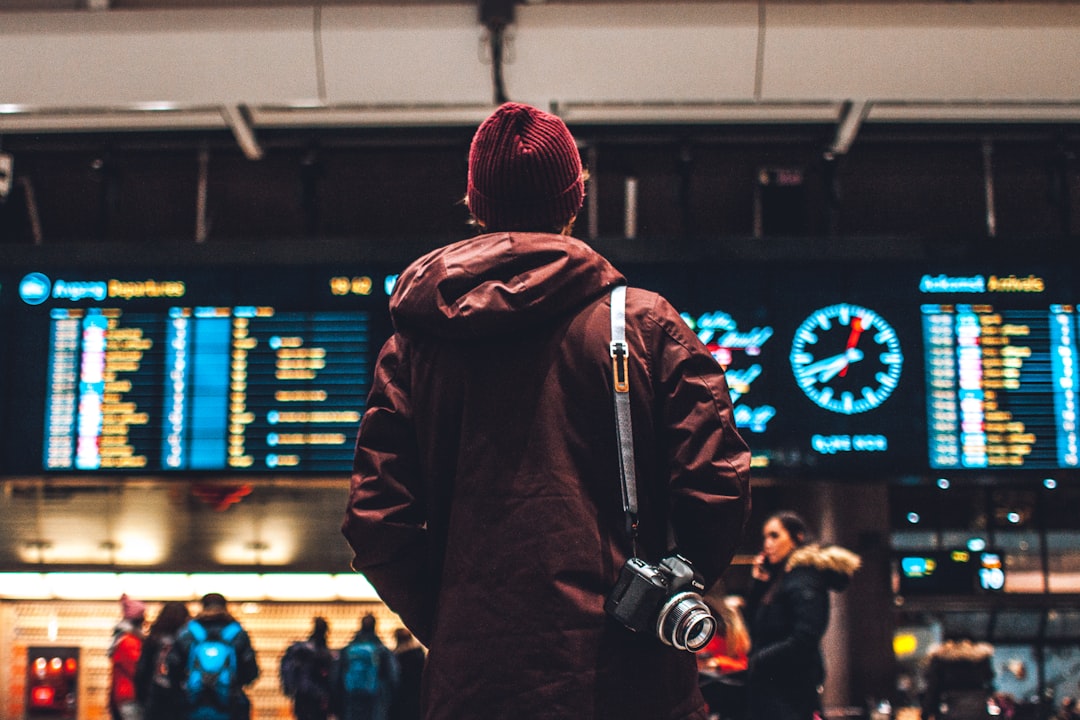 Photo by Erik Odiin on Unsplash
Here’s what you actually need to know: how airport security changed over 25 years, where to honor the anniversary, and what to expect if you’re flying between September 9 and September 14, 2026.
How Airport Security Changed After 9/11: The 25-Year Timeline
Before September 11, 2001, airport security was contracted out to private companies, and passengers could walk to the gate with anyone. Box cutters and small knives under 4 inches were legal carry-on items. That all ended when four hijacked planes crashed into the World Trade Center towers, the Pentagon, and a field in Shanksville, Pennsylvania, killing 2,977 people.
The changes came fast. Within two months, Congress passed the Aviation and Transportation Security Act, creating the TSA. By the end of 2002, federal screeners had replaced private contractors at all 429 commercial airports in the U.S. Cockpit doors were reinforced and locked. Pilots got access to firearms through the Federal Flight Deck Officer program.
Then came the layers. In 2003, the TSA launched the Computer Assisted Passenger Prescreening System. In 2006, after the transatlantic liquid bomb plot, the 3-1-1 rule for liquids went into effect — 3.4 ounces per container, 1 quart-sized bag, 1 bag per passenger. Full-body scanners arrived in 2007 and expanded after the 2009 Christmas Day underwear bomber attempt. In 2010, the TSA rolled out Advanced Imaging Technology at major hubs.
More recently: Real ID enforcement went fully live on May 7, 2025, meaning your standard driver’s license no longer works at TSA checkpoints unless it’s Real ID-compliant or you bring a passport. Facial recognition scanners are now in over 400 airports. And in 2024 alone, the TSA intercepted 6,678 firearms at checkpoints — a record.
MSU Denver aviation experts say today’s travelers are statistically safer than at any point in commercial aviation history. But they also flag emerging threats: drones near airports, insider threats, and cyberattacks on air traffic control systems.
What to Expect at Airports This Week (Sept 9–14, 2026)
The TSA is treating the 25th anniversary as a national security event. Here’s what that means for you.
Arrive earlier than usual. The TSA recommends 2 hours before domestic flights and 3 hours before international. This week, add 30 to 60 minutes on top of that at major hubs. At JFK, Newark, Dulles, and Boston Logan, plan for 3 hours domestic.
Expect more random screening. Secondary screening rates rise during high-threat periods. If you’re selected, you’ll go through a pat-down or additional bag inspection. It’s not personal.
Leave the liquids at home. The 3-1-1 rule is still in force. TSA PreCheck members can keep laptops and shoes on, but liquids still follow the same limits unless you’re at a checkpoint with CT scanners, which now number over 2,000 nationwide.
Real ID or passport required. As of May 2025, a standard driver’s license is not enough. Bring your passport, passport card, or Real ID-compliant license. No exceptions.
Memorial traffic is real. If you’re flying into DCA, EWR, or JFK for anniversary events, book ground transportation in advance. Rideshare surge pricing at Reagan National hit 2.5x during the 20th anniversary in 2021.
Where to Honor the 9/11 Anniversary in 2026
1. National September 11 Memorial & Museum — New York City
Best for: First-time visitors, families, anyone who wants the full historical record.
The memorial’s twin reflecting pools sit in the footprints of the original towers. The museum, 70 feet underground, holds over 10,000 artifacts and 2,983 names. Admission runs $33 for adults, $27 for seniors and veterans, $21 for youth 7–17, and free for 9/11 family members and first responders. The anniversary ceremony on September 11 starts at 8:30 a.m. and is reserved for family members. Public visitation resumes at 3 p.m.
Pros: Comprehensive, deeply moving, well-organized. Cons: Crowded on the anniversary, requires timed-entry tickets, security screening is airport-style. Book at [AFFILIATE_LINK_911_MEMORIAL_TICKETS].
2. Pentagon Memorial — Arlington, Virginia
Best for: Military families, D.C.-area travelers, anyone seeking a quieter experience.
The Pentagon Memorial opens daily at 7 a.m. and closes at 10 p.m. It’s free, no tickets required. The 184 benches are arranged by the victims’ ages, from 3-year-old Dana Falkenberg to 71-year-old John Yamnicky. The anniversary ceremony is private, but the memorial itself stays open.
Pros: Free, accessible by Metro (Pentagon station, Blue/Yellow lines), less crowded. Cons: Limited parking, no on-site restrooms, bag restrictions near the Pentagon.
3. Flight 93 National Memorial — Shanksville, Pennsylvania
Best for: Road-trippers, history buffs, anyone who wants the full story.
This is the least-visited of the three sites, which makes it the most reflective. The Tower of Voices — a 93-foot musical instrument with 40 wind chimes — is the newest addition. The visitor center is free. The memorial is about 80 miles southeast of Pittsburgh, so you’ll need a car.
Pros: Quiet, free, powerful. Cons: Remote, limited lodging nearby, 3-hour drive from D.C. or Pittsburgh.
4. Local Ceremonies Nationwide
Over 200 communities hold their own remembrances — from Boston Logan’s annual moment of silence at 7:46 a.m. to firehouse ceremonies in nearly every state. Check your local fire department or city hall for times.
Comparison Table: Which Memorial Should You Visit?
| Memorial | Location | Cost (Adult) | Best For | Crowd Level on 9/11 | Getting There |
|---|---|---|---|---|---|
| 9/11 Memorial & Museum | NYC | $33 | First-timers, families | Very high | Subway (1, 2, 3, A, C, E, R, W) |
| Pentagon Memorial | Arlington, VA | Free | Military, D.C. travelers | Moderate | Metro Blue/Yellow |
| Flight 93 Memorial | Shanksville, PA | Free | Road trips, reflection | Low | Car only |
| Boston Logan Ceremony | Boston, MA | Free | Aviation history fans | Moderate | Silver Line |
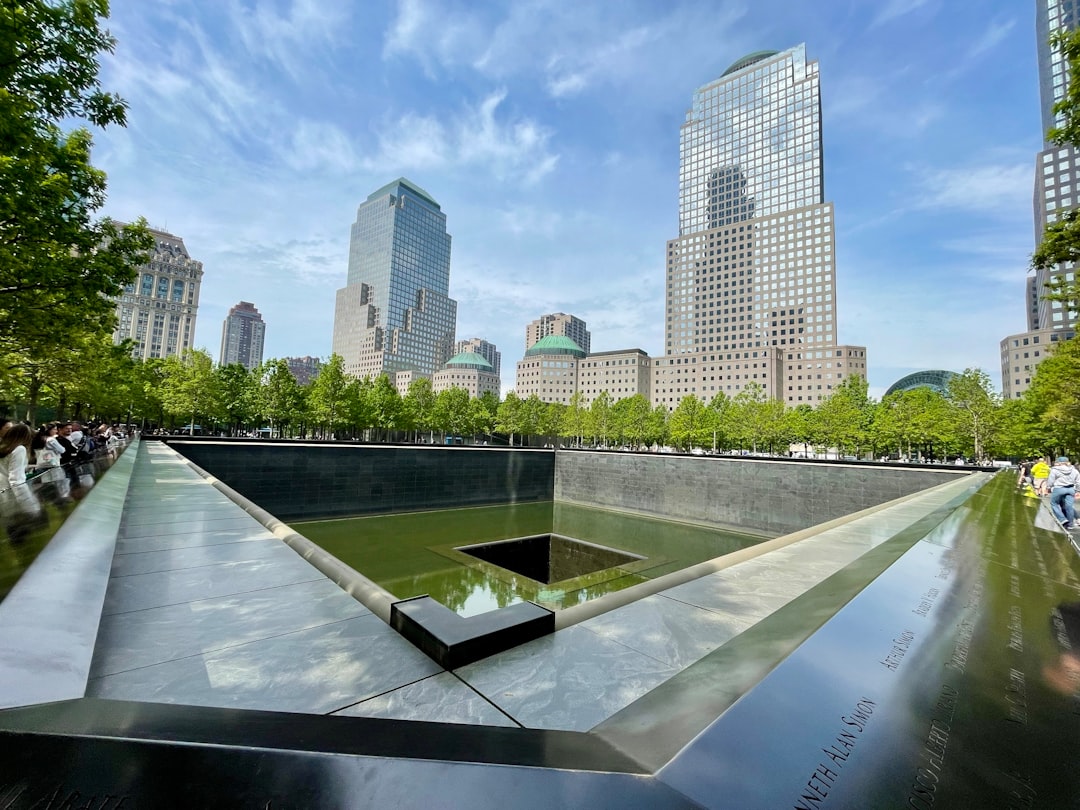 Photo by Sedric Benson on Unsplash
Airport Security Then vs. Now: What Actually Changed
If you flew in 2000, you remember walking to the gate with a coffee and a pocketknife. Here’s what changed, in numbers.
| Security Feature | Before 9/11 | 2026 |
|---|---|---|
| Checkpoint operator | Private contractors | Federal TSA |
| ID requirement | Often none | Real ID or passport |
| Liquids | Unlimited | 3.4 oz / 1 quart bag |
| Shoes | On | Off (unless PreCheck) |
| Laptops | In bag | Out of bag (unless PreCheck) |
| Full-body scanners | None | 2,000+ CT units |
| Federal Air Marshals | 33 | Thousands (classified) |
| Cockpit doors | Unlocked | Fortified, locked |
| No-fly list | 16 names (pre-9/11) | ~80,000 (classified) |
| TSA PreCheck members | N/A | 20+ million |
The TSA now screens roughly 2.5 million passengers daily. In 2024, the agency processed over 900 million travelers — a record. Wait times at standard checkpoints average 24 minutes; PreCheck averages 8.
Should You Get TSA PreCheck or Clear Before You Fly?
If you’re flying this week, it’s too late to enroll — PreCheck takes 3 to 5 days for approval, and Clear requires an in-person enrollment. But if you’re planning fall travel, here’s the breakdown.
TSA PreCheck — $78 for 5 years, or $70 for renewal. Gets you expedited screening at 200+ airports, no shoe removal, no laptop out. Best for: frequent domestic flyers. Apply at [AFFILIATE_LINK_TSA_PRECHECK].
Clear — $199 per year, $179 for Delta and United members. Uses biometrics to skip the ID check line entirely. Best for: travelers at major hubs like ATL, DEN, and MCO where lines are longest. Sign up at [AFFILIATE_LINK_CLEAR].
Global Entry — $120 for 5 years, includes PreCheck. Best for: international travelers. Requires an interview.
Pros of PreCheck: Cheap, fast, widely accepted. Cons: Not guaranteed — random screening still happens. Pros of Clear: Skips the longest line. Cons: Expensive, only at 50+ airports, still need to go through TSA screening after.
FAQs About Traveling During the 9/11 Anniversary
Is it safe to fly on September 11, 2026? Yes. Aviation security is at its highest level in history, and the TSA runs heightened operations every year on the anniversary. Statistically, flying remains the safest form of long-distance travel. The bigger issue is delays, not danger.
Will airports be busier this week? Yes, especially at East Coast hubs. Expect 15–30% longer checkpoint waits at JFK, EWR, BOS, and DCA from September 9 through September 13. Book morning flights — before 8 a.m. — to avoid peak congestion.
Do I need a Real ID to fly this week? Yes. As of May 7, 2025, the TSA requires Real ID-compliant identification or a passport. A standard driver’s license from a non-compliant state will not work.
Can I bring liquids through security if I have PreCheck? No. The 3-1-1 rule still applies to PreCheck passengers unless you’re at a checkpoint equipped with CT scanners, which are now at over 2,000 lanes nationwide. Check the TSA app for your specific airport.
Are the memorials open on September 11? The 9/11 Memorial Museum opens at 3 p.m. on September 11 due to the private family ceremony. The Pentagon Memorial and Flight 93 Memorial remain open all day. The 9/11 Memorial plaza itself is closed to the public until 3 p.m.
What time should I arrive at the airport this week? Three hours before domestic departures at major hubs, two and a half hours at regional airports. If you’re flying out of DCA, JFK, EWR, or BOS, add another 30 minutes.
What’s Next for Airport Security After 25 Years
The TSA is testing several new technologies in 2026, including AI-powered threat detection, self-service screening lanes at Las Vegas Harry Reid International, and biometric exit verification at 30+ airports. The agency’s goal: cut average checkpoint time to under 10 minutes by 2028.
But new threats are emerging. Drone incursions near airports jumped 40% in 2025. Cyberattacks on airline reservation systems are more frequent. And the TSA is still intercepting record numbers of firearms — 6,678 in 2024 alone, with 93% loaded.
For travelers, the practical advice hasn’t changed much in 25 years: arrive early, pack light, know the rules, and be patient with the people keeping you safe. The 25th anniversary is a reminder of why those rules exist — and why they still matter.
If you’re visiting a memorial this week, take your time. If you’re flying, give yourself extra room. And if you’re old enough to remember that Tuesday morning in 2001, take a moment at the gate. The airport looks different now. So do we.
Last updated: 2026-09-11
Affiliate disclosure: This article contains affiliate links. If you book through them, we may earn a small commission at no extra cost to you. Light Trip Notes only recommends services we’ve used or vetted.