The Short Answer: You Can Travel for 26 Weeks Without Your Payment Changing
Here’s the good news first. If you’re receiving the Age Pension and you want to visit family in Italy, take that Alaska cruise, or spend a winter in Thailand, you can leave Australia for up to 26 weeks and your payment rate stays exactly the same. That’s roughly six months of worry-free travel.
The clock starts the day you depart and stops the day you return. Cross the 26-week mark, though, and Centrelink recalculates your payment based on your Australian Working Life Residence (AWLR) — the number of years you actually worked or lived in Australia between age 16 and Age Pension age. That single number determines whether your payment continues, shrinks, or stops entirely.
This matters right now because 2026 has seen a surge in Australian seniors planning long-stay overseas trips — partly due to the weaker Aussie dollar making Asia and Southern Europe far more affordable than domestic travel, and partly because a wave of retirees who deferred travel during recent years are finally cashing in those plans. Knowing the rules before you book is the difference between a stress-free trip and a nasty letter from Centrelink.
 Photo by Dan Freeman on Unsplash
How the 26-Week Rule Actually Works
The 26-week period is not per calendar year. It’s per absence. Leave Australia, come back, leave again — each new absence resets the clock. This is a genuinely useful loophole for anyone planning multiple shorter trips rather than one long stint.
During those first 26 weeks abroad, your Age Pension continues at your normal rate. Your Pensioner Concession Card also stays valid for most purposes, though it won’t work for Australian-based concessions while you’re physically overseas.
After 26 weeks, things get more complicated. Centrelink applies a “proportionality” calculation. If you have 35 years or more of AWLR, you’ll typically keep receiving the full-rate pension indefinitely while overseas. If you have fewer years, your payment is reduced proportionally.
Here’s a quick example. Say you have 20 years of AWLR. After 26 weeks abroad, your payment would be reduced to roughly 20/35ths of the full rate — about 57%. Someone with 10 years of AWLR would drop to roughly 28.5%.
| AWLR Years | Payment After 26 Weeks | Practical Impact |
|---|---|---|
| 35+ years | Full rate continues | No reduction, travel freely |
| 25 years | ~71% of full rate | Moderate reduction |
| 20 years | ~57% of full rate | Significant reduction |
| 10 years | ~28.5% of full rate | Major reduction |
| Under 10 years | Payment may stop | Plan short trips only |
Your AWLR is calculated in years, and Centrelink counts any period you were physically present in Australia between age 16 and pension age — not just paid work. Time spent as a full-time student, caring for family, or unemployed all count.
What Happens to Your Pension Supplement and Concession Card
Your Age Pension isn’t one single payment. It’s made up of several components, and they don’t all follow the same overseas rules.
The base pension and the Pension Supplement both continue during the first 26 weeks. After that, the Pension Supplement is typically the first thing to be reduced or stopped, depending on your AWLR.
Your Pensioner Concession Card stays active during temporary absences, but you can’t use it for overseas discounts. More importantly, it won’t cover you for the Pharmaceutical Benefits Scheme while you’re abroad — you’ll be paying full price for any medication overseas.
The Energy Supplement follows the base pension rules. If your payment reduces after 26 weeks, this reduces too.
One thing many travellers miss: your Commonwealth Seniors Health Card (if you have one instead of or alongside the Pensioner Concession Card) is cancelled after 19 weeks overseas. That’s a shorter window than the pension itself, so if you rely on it for cheaper medicines back home, plan your return accordingly.
Portability by Destination: Not All Countries Are Equal
Australia has international social security agreements with a specific list of countries. If you’re travelling to one of these, your payment can often continue at a higher rate for longer than the standard rules allow.
The main agreement countries include:
- United Kingdom
- Italy
- Greece
- Ireland
- Portugal
- Spain
- Malta
- Netherlands
- Germany
- Canada
- United States
- New Zealand
- Chile, Croatia, Cyprus, Denmark, Finland, Norway, Poland, Slovenia, Switzerland, and several others
If you’re heading to a country without an agreement — think Thailand, Vietnam, Indonesia, most of South America, or much of Africa — the standard 26-week rule applies with no special portability extensions.
This is a big deal for the popular retiree destinations. Thailand and Bali are cheap, but they offer no agreement protection. Italy and Greece, on the other hand, do.
If you’re planning an extended stay in a non-agreement country, keep your absence under 26 weeks or accept the AWLR reduction.
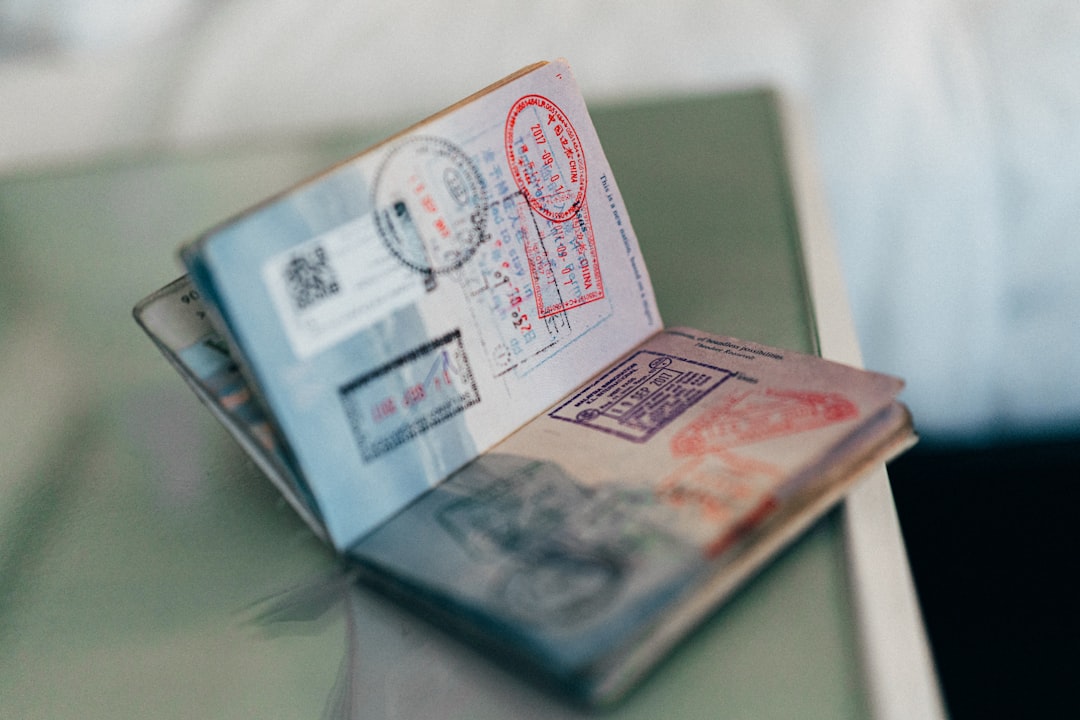 Photo by Kit (formerly ConvertKit) on Unsplash
The Notifications You Must Send Centrelink
You are legally required to tell Centrelink when you leave Australia. You don’t need permission to travel, but you do need to notify them.
The easiest way is through your myGov account linked to Centrelink, or via the Centrelink phone line on 132 300. You’ll need to provide:
- Your departure date
- Your expected return date
- Your overseas address (even if temporary)
- Your contact number overseas
You can update this information after you leave if plans change, but you must do it. Failure to notify can result in overpayments that you’ll have to repay later — sometimes years later, with interest.
If you’re leaving for more than 26 weeks, Centrelink will send you a formal notice about the change to your payment. Don’t ignore it. If you disagree with the AWLR calculation, you have the right to request a review.
Travel Insurance: The Non-Negotiable
Medicare does not cover you overseas. Full stop. The Australian government’s Reciprocal Health Care Agreements exist with a handful of countries — the UK, Italy, Malta, the Netherlands, Sweden, Finland, Norway, Belgium, Slovenia, and New Zealand — but they’re limited. They typically cover emergency treatment only, not repatriation, not ongoing care, and not pre-existing conditions.
For a 70-year-old with any medical history, comprehensive travel insurance is essential. Expect to pay between $250 and $600 for a single trip of 4-6 weeks, depending on your age and health declarations. Annual multi-trip policies for seniors start around $500 and go up to $1,200.
Look for policies that specifically cover:
- Emergency medical evacuation (can cost $100,000+ without cover)
- Pre-existing conditions (you must declare these)
- Trip cancellation
- Repatriation of remains
Companies like Cover-More, Allianz, and Fast Cover all offer senior-specific policies. Compare carefully — some exclude anyone over 80 entirely, and others charge steep premiums for travellers over 75.
AFFILIATE_LINK_[TRAVEL_INSURANCE]
Best Destinations for Long-Stay Australian Pensioners in 2026
Where you go matters as much as how long you stay. Here are the destinations that offer the best combination of affordability, healthcare access, and pension-friendly rules.
Thailand
Pros: Incredibly cheap. A comfortable apartment in Chiang Mai runs $500-$800/month. Street food meals cost $2-$3. Excellent private hospitals in Bangkok and Chiang Mai. Warm year-round.
Cons: No social security agreement with Australia. You’ll hit the 26-week AWLR reduction if you stay longer. Visa runs required for stays over 60 days (though retirement visas are available).
Best for: Pensioners with 35+ years AWLR who can stay indefinitely, or anyone doing a 3-5 month winter escape.
Italy
Pros: Social security agreement in place, so portability rules are more generous. World-class healthcare. Slower pace of life in the south. Family connections for many Italian-Australians.
Cons: More expensive than Southeast Asia. Schengen visa limits you to 90 days in any 180-day period unless you have an Italian passport or long-stay visa.
Best for: Italian-Australian pensioners visiting family, or anyone wanting a European base with pension protection.
Greece
Pros: Agreement country. Affordable compared to Western Europe. Island life is cheap outside peak season. Strong expat communities.
Cons: Healthcare on smaller islands is limited. Summer crowds and prices spike. Bureaucracy can be frustrating.
Best for: Seniors wanting Mediterranean living with pension portability.
New Zealand
Pros: Agreement country. Close to home. No language barrier. Similar culture.
Cons: Not actually cheap anymore. Auckland and Queenstown prices rival Sydney.
Best for: Short trips and family visits rather than long-stay budget travel.
Malaysia
Pros: Very affordable. MM2H (Malaysia My Second Home) visa available for retirees. Excellent private healthcare in Kuala Lumpur and Penang. English widely spoken.
Cons: No social security agreement. Tropical climate isn’t for everyone.
Best for: Budget-conscious pensioners doing 3-6 month stays.
Managing Your Money While Overseas
Centrelink pays into your Australian bank account. You’ll need to access that money overseas.
The cheapest option is usually a Wise or Revolut card, which gives you near-market exchange rates and low conversion fees. A traditional bank debit card will charge you 3% per transaction plus a poor exchange rate — that adds up fast over six months.
If you’re staying somewhere long-term, consider opening a local bank account. In Thailand, for example, a Bangkok Bank account makes life much easier for rent, utilities, and groceries.
Keep your Australian bank account active. Centrelink won’t pay into a closed account, and reopening one from overseas is a nightmare.
AFFILIATE_LINK_[TRAVEL_MONEY_CARD]
Returning to Australia: What You Need to Do
When you come back, you must notify Centrelink within 14 days of your return. Your payment rate will be restored to the normal level from your date of return, assuming you’re back in Australia.
If you stayed overseas for more than 26 weeks and your payment was reduced, it’s restored automatically once you’re back on Australian soil. No application needed — but you do need to tell them you’ve returned.
If you stayed overseas for more than 12 months, you may face additional scrutiny around your residency status. The Age Pension requires you to be an Australian resident, and extended absences can raise questions about whether you still meet that requirement. This is rare for genuine holiday travel but worth knowing if you’re planning a multi-year absence.
FAQ
Can I leave Australia the day after my pension is granted? Yes. There’s no waiting period. You can travel immediately after your first payment is processed. Just notify Centrelink of your departure.
What happens if I stay overseas for 27 weeks instead of 26? Your payment reduces from the day you pass the 26-week mark, calculated on your AWLR. If you have 35+ years, there’s no reduction at all. If you have fewer years, the reduction applies for the remainder of your absence.
Does my Pensioner Concession Card work overseas? No. It’s only valid for Australian concessions. It stays active during temporary absences but won’t help you overseas.
Can I keep my pension if I move overseas permanently? Yes, if you have 35+ years of AWLR, or if you’re moving to an agreement country. Otherwise, your payment reduces proportionally to your AWLR and may eventually stop.
What if I get sick overseas and can’t return when planned? Notify Centrelink immediately. Medical emergencies are usually accepted as valid reasons for extended absence, but you need to document everything and communicate with Centrelink as soon as possible.
Do I need to declare my overseas travel if it’s under 26 weeks? Yes. You must notify Centrelink of any overseas travel, regardless of duration. It’s a legal requirement and failing to do so can result in overpayment recovery.
The Bottom Line
The 26-week rule is your friend. Plan trips under six months and your Age Pension continues unchanged — no AWLR calculation, no reduction, no drama. If you want longer stays, check your AWLR first and consider whether an agreement country makes more financial sense.
Notify Centrelink before you leave, get proper travel insurance, and use a low-fee money card. Do those three things and you can travel the world on your pension without losing a cent you’re entitled to.
This article contains affiliate links. If you purchase through these links, we may earn a small commission at no extra cost to you. This helps support lighttripnotes.com and keeps our content free.
Last updated: 2026-09-18