Mount Etna Eruption 2026: Italy Travel Advisory for Canadians, Flight Disruptions, and What to Do If You’re in Sicily
If you’re flying into or out of Sicily right now, check your flight before you leave for the airport. Mount Etna’s latest eruption has sent a volcanic ash cloud across eastern Sicily, and Catania’s Fontanarossa Airport (CTA) has suspended arrivals, with hundreds of flights canceled. Canada has updated its Italy travel advisory to flag the disruption. If you’re already in Sicily, you’re not stranded forever — but you need a plan.
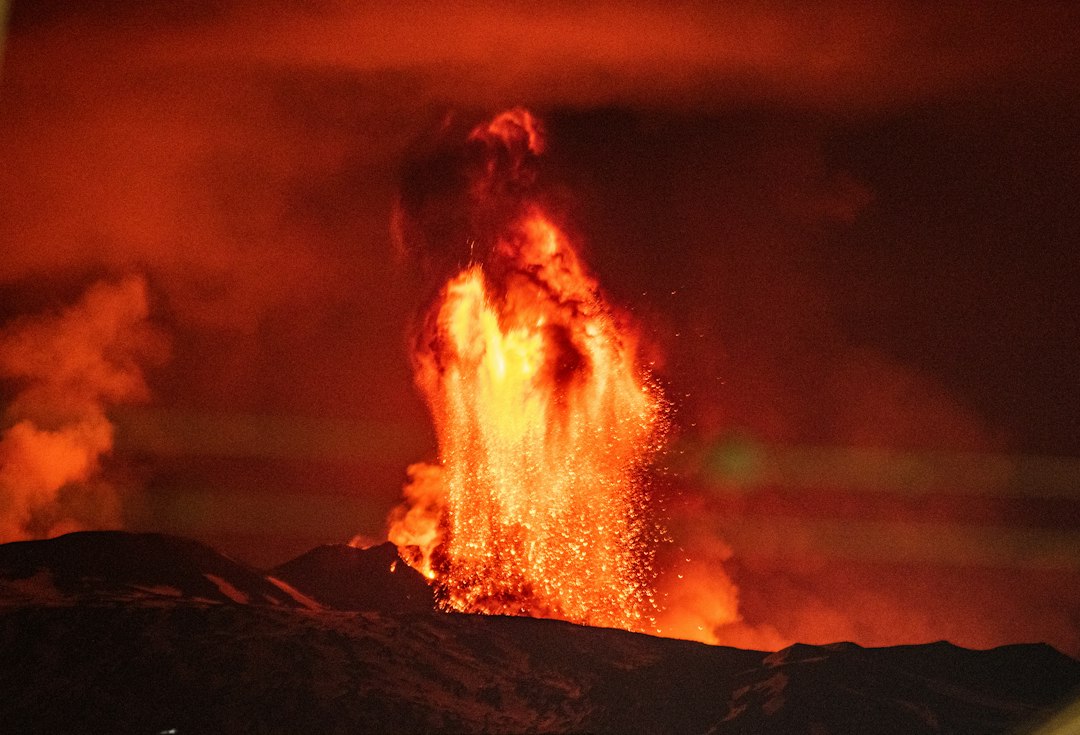 Photo by Piermanuele Sberni on Unsplash
What’s Actually Happening With Mount Etna Right Now
Etna is Europe’s most active volcano, and it erupts constantly — that’s not new. What matters for travelers is the ash plume, and this one is drifting over the flight paths that feed Catania, Sicily’s busiest airport and the main gateway for most Canadian visitors.
The current activity has forced Catania airport to suspend arrivals, and airlines have canceled hundreds of flights. The Canadian government’s advisory update is blunt: “Flights are disrupted in Sicily due to a volcanic ash cloud from the recent eruption of Mount Etna.” It adds, “Confirm the status of your flight before travelling to the airport.”
That last line is the single most important sentence in this article. Don’t assume your airline will text you in time. Ash clouds shift with the wind, and airports reopen and close again within hours.
The Italy Travel Advisory for Canadians: What It Actually Says
Canada’s advisory for Italy is not a “do not travel” warning. It’s a disruption notice layered on top of the standard Italy advice. Here’s the practical breakdown:
- The advisory is regional, not national. It specifically names Sicily and the Etna ash cloud. Rome, Florence, Venice, and Milan are unaffected by this eruption.
- The advice is operational, not safety-based. The risk isn’t lava reaching your hotel — it’s ash damaging jet engines and forcing airport closures.
- Canadians don’t need a visa for stays under 90 days, and that hasn’t changed. This is purely a logistics problem.
If you have a trip to Rome or the Amalfi Coast booked, you can relax. If your itinerary touches Catania, Palermo, or a connecting flight through either, keep reading.
Which Airports and Routes Are Affected
This is where most travelers get confused, so let’s be precise.
Catania (CTA) is the epicenter. It sits roughly 20 km south of Etna’s summit and takes the brunt of every ash fall. Arrivals have been suspended during the worst of it, and cancellations run into the hundreds.
Palermo (PMO), on the opposite side of the island, is usually less affected but absorbs overflow traffic and can see delays when Catania diverts flights its way.
Comiso (CIY), the small airport in southeastern Sicily, is a backup option but has limited routes.
Rome (FCO), Naples (NAP), and Milan (MXP) are your mainland escape hatches. If you can get to the mainland, you can usually fly home on schedule.
 Photo by Sam Ferrara on Unsplash
Your Options If Your Flight Is Canceled: A Comparison
Here’s the honest breakdown of what you can actually do, with real tradeoffs.
| Option | Cost (approx.) | Time to get home | Pros | Cons | Best for |
|---|---|---|---|---|---|
| Rebook via Catania (wait it out) | $0–$150 change fee | 1–3 days | Cheapest; airport often reopens within 24–48 hrs | Unpredictable; you may rebook into another cancellation | Travelers with flexible dates |
| Ferry to mainland + fly from Rome/Naples | $60–$120 ferry + new flight | 12–36 hrs | Reliable; bypasses ash entirely | Extra cost; you eat the original ticket | Anyone with a hard deadline |
| Train/bus to Palermo + fly out | $20–$40 ground + new flight | 8–24 hrs | Palermo often stays open | Limited seats; still in Sicily’s ash zone | Budget travelers |
| Rent a car and drive to Naples | $150–$400 one-way rental | 8–10 hrs + ferry | Total control | One-way fees are brutal; ferries sell out | Groups splitting costs |
| Wait for airline rebooking | $0 | Unknown | Airline pays if it’s their call | Can take days during peak disruption | Patient travelers with no deadline |
A note on your rights: Under EU Regulation 261/2004, if your flight is canceled, you’re entitled to rebooking or a refund — and potentially compensation. But volcanic ash is classified as an “extraordinary circumstance,” which means airlines typically owe you rebooking and assistance but not cash compensation. Know the difference before you argue at the counter.
For ferry bookings across the Strait of Messina, [AFFILIATE_LINK_FERRY_BOOKING] is the fastest way to lock in a crossing before seats vanish.
Step-by-Step: What to Do If You’re in Sicily Right Now
Do these in order.
1. Confirm your flight status directly with the airline. Not a third-party app — the airline’s own site or app. Third-party trackers lag during ash events.
2. Don’t go to the airport until your flight is confirmed as operating. Catania’s terminal fills up fast, and standing in a queue with no working flight is the worst place to be.
3. Screenshot everything. Your booking, the cancellation notice, any receipts for meals or hotels. If you claim expenses later, documentation wins.
4. Ask your airline for a rebooking to Palermo or a mainland airport. Some will do this for free during a disruption. Ask specifically — don’t accept the first “no.”
5. If the airline won’t help, book your own escape. A $70 ferry to Messina or a $30 bus to Palermo can save you three days of waiting.
6. Keep your accommodation flexible. If you’re in Catania, consider moving to Palermo or Taormina’s lower town, where ash fall is lighter and you’re closer to alternative routes.
Getting to the Mainland: The Ferry and Train Routes That Work
The Strait of Messina separates Sicily from mainland Italy, and it’s your lifeline when Catania shuts down.
Ferries run constantly between Messina and Villa San Giovanni, roughly every 20–30 minutes during the day. Foot passengers pay around €2.50–€5, and the crossing takes about 20 minutes. Car ferries cost more and sell out during disruptions.
Trains connect Messina to mainland cities. From there, you can reach Naples in about 4 hours or Rome in roughly 6–7 hours on high-speed rail. Book through [AFFILIATE_LINK_TRAIN_ITALY] to compare Trenitalia and Italo fares — Italo is often cheaper if you book same-day.
Buses (SAIS and FlixBus) run from Catania and Palermo to Rome and Naples. Cheaper than trains, slower, but reliable when airports aren’t.
Once you’re on the mainland, Rome’s Fiumicino (FCO) and Naples (NAP) have far more capacity to absorb stranded travelers.
Should You Cancel Your Trip or Push Through?
If your trip is more than a week out, don’t cancel anything. Etna’s eruptions are usually short-lived — many ash events clear within 24–72 hours. Airlines and airports have gotten good at reopening fast.
If your trip is in the next 48 hours and Catania is your entry point, call your airline before you fly. Ask if they’ll reroute you through Palermo or Rome at no charge. Many will during an active advisory.
If you’re already in Sicily and your return flight is canceled, the ferry-and-mainland plan is your most reliable move. It costs more, but it beats sleeping in an airport for three nights.
For travel insurance that actually covers volcanic ash disruptions, [AFFILIATE_LINK_TRAVEL_INSURANCE] is worth checking — but read the fine print, because many policies exclude “acts of God” and volcanic events unless you buy a specific rider.
Is It Safe to Be Near Mount Etna?
Yes, with caveats. The eruption itself is not a threat to towns like Catania, Taormina, or Syracuse — they’re outside the lava flow zones. The real hazards are ash fall (messy, can irritate lungs), minor earthquakes, and the airport closures.
If you’re doing an Etna excursion, guides will cancel or reroute based on activity. Don’t hike Etna independently during an active eruption — the summit area is off-limits, and conditions change fast.
For most travelers, the smart move is to enjoy Sicily’s cities and coast while you wait out the ash. Taormina, Syracuse, Ragusa, and the Val di Noto are all spectacular and unaffected by flight issues.
FAQ: Mount Etna Eruption and Your Sicily Trip
Is Catania airport open right now? It’s been reopening and closing in cycles. Arrivals were suspended during the worst ash fall, and hundreds of flights were canceled. Check CTA’s official site and your airline’s app the morning of your flight — status can change within hours.
Will my Canadian airline refund me if my flight is canceled? If the airline cancels, you’re entitled to a refund or rebooking under EU rules (which apply to flights departing the EU, including from Sicily). Cash compensation is usually denied because volcanic ash counts as an extraordinary circumstance. Ask for rebooking first.
Can I just fly into Rome instead and take a train to Sicily? Yes, and this is often the smartest move. Fly into Rome or Naples, then take a high-speed train to Messina or Catania. It adds 5–7 hours but removes all ash risk. Book trains via [AFFILIATE_LINK_TRAIN_ITALY].
How long do Etna ash disruptions usually last? Most clear within 24–72 hours. Some have dragged on for a week during sustained activity. Plan for 2–3 days of disruption as a realistic worst case.
Does the Canada travel advisory mean I shouldn’t go to Italy? No. It’s a regional disruption notice for Sicily, not a blanket warning. Rome, Florence, Venice, and Milan are operating normally. If your trip is mainland-only, you’re fine.
What if I’m already in Catania and can’t get a flight for days? Take the ferry from Messina to Villa San Giovanni, then a train to Rome or Naples. It costs $60–$120 total and gets you to a major hub with far more flight options. Book the ferry through [AFFILIATE_LINK_FERRY_BOOKING] before you leave.
The Bottom Line
Mount Etna erupting in 2026 is disruptive, not dangerous, for most travelers. The ash cloud is a flight problem, not a safety problem. Confirm your flight before leaving for the airport, know your ferry and train backup routes, and don’t panic-cancel a trip that’s still a week away.
If you’re in Sicily now, the ferry-to-mainland plan is your escape hatch. If you’re heading there soon, build flexibility into your first and last 48 hours. Etna has been doing this for thousands of years — the airlines have learned to cope, and so can you.
This article contains affiliate links. If you book through them, we may earn a small commission at no extra cost to you. Always confirm flight and ferry status directly with operators before traveling.
Last updated: 2026-09-16