Mount Etna Eruption 2026: Italy Travel Advisory for Canadians, Flight Disruptions, and What to Do If You’re in Sicily
Mount Etna is erupting again as of September 2026, and it’s causing real problems for travelers heading to eastern Sicily. Catania’s Fontanarossa Airport (CTA) has been the hardest hit, with repeated ash-related closures and delays, while flights into Palermo (PMO) and Comiso (CIY) are absorbing the overflow. If you’re Canadian and you have a trip booked to Sicily in the coming weeks, you don’t need to cancel — but you do need to plan around the volcano.
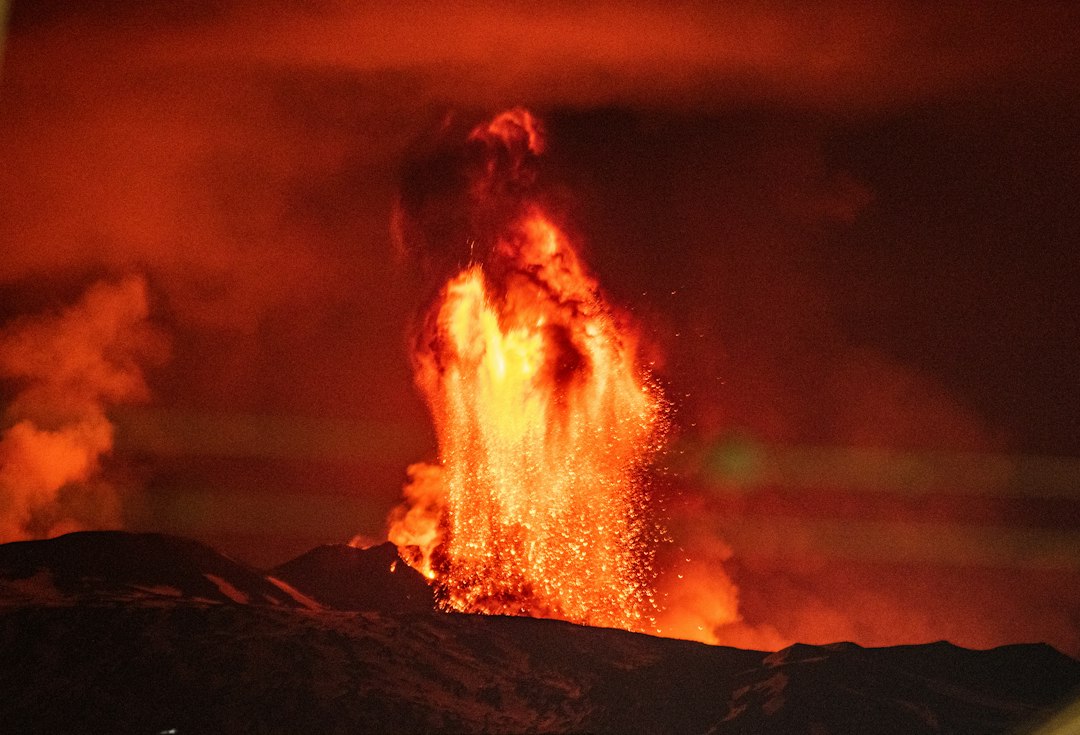 Photo by Piermanuele Sberni on Unsplash
Here’s the short version: Etna is Europe’s most active volcano and erupts multiple times per year, so this isn’t a catastrophe — it’s a recurring inconvenience that locals and airlines deal with constantly. The 2026 activity has been more persistent than usual, which is why you’re seeing headlines. Your job as a traveler is to know your backup airport, buy flexible tickets, and watch the ash advisories daily in the week before you fly.
What’s actually happening on Etna right now
Etna’s current eruptive phase began in late summer 2026 and has produced sustained Strombolian activity — that’s lava fountaining and ash plumes rather than a single catastrophic blast. Plumes have reached several kilometers in altitude and drifted southeast, which is the direction that dumps ash over Catania.
The Istituto Nazionale di Geofisica e Vulcanologia (INGV) monitors Etna around the clock from its Catania observatory. It issues color-coded alerts (green, yellow, orange, red) and aviation ash warnings that airlines act on immediately. As of this week, the volcano has been fluctuating between orange and red aviation codes.
The practical consequence isn’t lava — it’s ash. Volcanic ash melts inside jet engines at operating temperatures and re-solidifies on turbine blades. That’s why airports close rather than risk it. Even a thin ash layer on a runway can cause a plane to skid on landing.
Italy travel advisory status for Canadians
Global Affairs Canada has not issued a blanket “avoid travel” advisory for Sicily. The current guidance is to exercise normal security precautions for Italy overall, with a note to monitor local media and follow instructions from Italian civil protection authorities if you’re near Etna.
That’s the key distinction: there is no Canadian evacuation order, no state of emergency covering tourist areas, and no reason to cancel a Sicilian trip outright. The disruption is logistical, not safety-based, for anyone staying outside the immediate summit zone.
The areas that genuinely close during eruptions are the summit craters and the upper cable car zone above roughly 2,500 meters. Towns like Nicolosi, Zafferana Etnea, and Linguaglossa sit on Etna’s slopes and operate normally the vast majority of the time, though they do get ash fall that locals sweep off their balconies like snow.
If you’re registered with the Canadian government’s Registration of Canadians Abroad service, do it now — it’s free and it means you’ll get direct emails if the advisory level changes. It takes three minutes at travel.gc.ca.
Flight disruptions: what to expect at Catania, Palermo, and Comiso
This is where your trip actually gets complicated. Catania-Fontanarossa (CTA) is the primary gateway to eastern Sicily and sits only about 25 kilometers south of Etna’s summit. When the wind blows the wrong way, ash falls directly on the runway.
Here’s how the three Sicilian airports compare right now:
| Airport | Code | Distance from Etna | Current disruption level | Best for |
|---|---|---|---|---|
| Catania-Fontanarossa | CTA | ~25 km | High — frequent ash closures, 2–8 hr delays | Eastern Sicily, Taormina, Syracuse |
| Palermo Punta Raisi | PMO | ~150 km | Low — occasional overflow delays | Western Sicily, Palermo, Cefalù, Agrigento |
| Comiso | CIY | ~70 km | Moderate — limited flights, some diversions | Ragusa, Noto, southeast Sicily |
Catania (CTA) is the problem child. It’s the busiest airport in Sicily and the closest to the volcano, so it eats the most disruption. Airlines like ITA, Ryanair, easyJet, and Wizz Air routinely cancel or divert CTA flights during ash events. If your itinerary routes through Catania, build in a buffer day on each end.
Palermo (PMO) is your safest bet. It’s roughly 150 km from Etna on the opposite side of the island and almost never closes for ash. The tradeoff is that Palermo is a 3-hour drive or train ride from Catania and Taormina. If your trip is flexible, flying into Palermo and out of Palermo is the resilient choice.
Comiso (CIY) is a small airport in the southeast with limited routes — mostly seasonal European flights. It’s a useful backup if you can find a connection, but don’t count on it for a last-minute rebooking from Canada.
For Canadians, most routings go Toronto (YYZ) or Montreal (YUL) to a European hub — Rome (FCO), Paris (CDG), Frankfurt (FRA), or Amsterdam (AMS) — then a short hop to Sicily. That short hop is where you’ll feel the eruption. If it’s cancelled, you’re rebooking a 90-minute flight, not a transatlantic one, which is annoying but manageable.
If your flight is cancelled or delayed: your rights and your moves
EU Regulation 261/2004 applies to flights departing from an EU airport, and it applies to you as a Canadian passenger. That means if your Catania flight is cancelled or delayed more than 3 hours, you’re entitled to:
- Re-routing or refund — the airline must get you to your destination or refund the ticket
- Assistance — meals, refreshments, and hotel accommodation if you’re stranded overnight
- Compensation — €250 to €600, unless the airline can prove “extraordinary circumstances”
Here’s the catch: volcanic ash is the textbook example of extraordinary circumstances. Airlines will almost certainly deny cash compensation for ash-related cancellations, and they’re legally on solid ground. You’ll get rebooked and fed, but you probably won’t get the €600.
What you should do the moment you learn your flight is affected:
- Don’t queue at the airport desk. Get on the airline app or call the international reservations line while you’re still in the terminal — or better, before you leave your hotel. Phone agents can rebook you faster than the one desk agent handling 200 angry passengers.
- Ask specifically for Palermo or Comiso. Say the words “any Sicilian airport” — agents default to Catania because that’s your ticket, but they can usually move you.
- Consider a train. Sicily has a decent rail network, and a Catania–Palermo train takes about 3 hours. If you’re stuck in Palermo and need to reach Taormina, that’s a viable workaround.
- Keep every receipt. Meals, taxis, and hotels during a delay are reimbursable under EU261 — but you need documentation.
If you booked with a credit card that includes trip interruption coverage, check it. Some Canadian cards (the Scotia Passport Visa Infinite and the Amex Platinum, for example) cover additional expenses when a common carrier is delayed. It’s worth a call.
Should you cancel your Sicily trip?
No — not unless you specifically booked a summit trek or a stay in the immediate eruption zone. Sicily is 25,711 square kilometers, and the volcano affects a small fraction of it.
Palermo, Cefalù, Agrigento’s Valley of the Temples, the Aeolian Islands, Syracuse, Noto, and Ragusa are all completely unaffected. Taormina, which sits about 50 km from the summit, is generally fine — you’ll see a spectacular glowing plume at night from the Greek Theatre, which is honestly a once-in-a-lifetime view.
The trips I’d reconsider are:
- Etna summit treks and 4x4 crater tours — these are suspended during active eruptions. Refundable, but disappointing if it’s the whole point of your trip.
- Rigid, non-refundable Catania flight itineraries with no buffer — if you’re flying in the morning of a cruise departure, you’re gambling.
- Travel in the immediate ash-fall zone — Nicolosi and Zafferana are usually fine, but check with your accommodation before arrival.
For most travelers, the smarter move is to keep the trip and add flexibility. Book refundable or changeable fares, add a buffer day before any cruise or fixed commitment, and buy travel insurance that covers volcanic ash — many basic policies exclude it as a “known event” once an eruption is in the news.
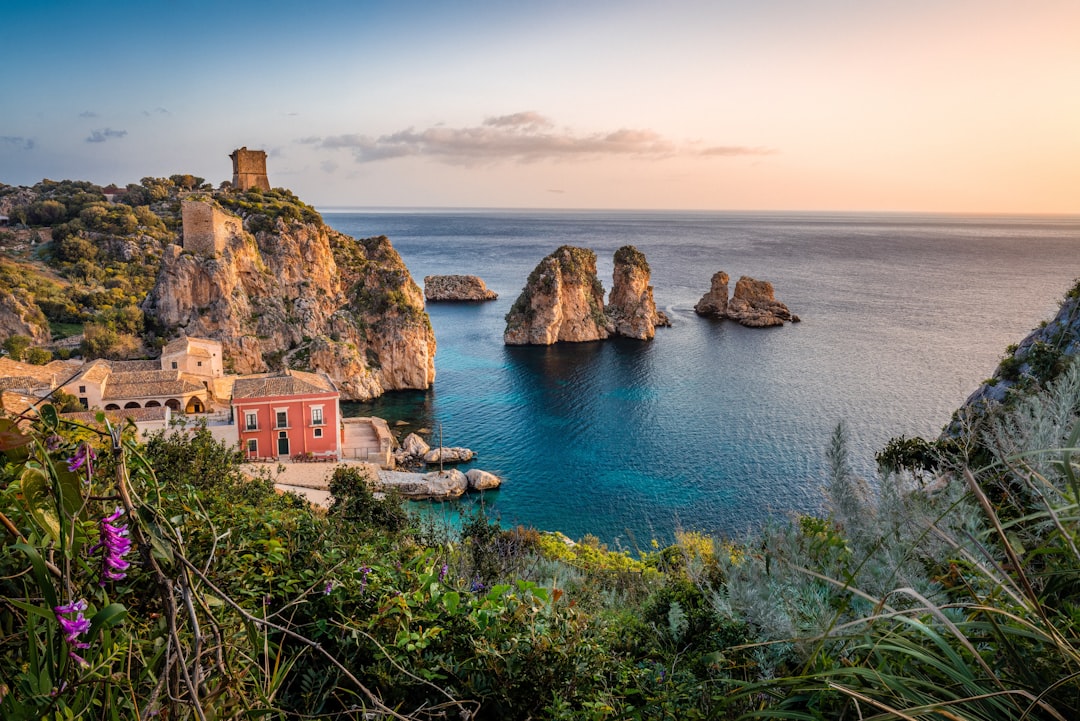 Photo by Sam Ferrara on Unsplash
Getting to and around Sicily during the eruption
If you’re already in Sicily or arriving soon, here’s how to move around without losing your mind.
Trains are your friend. Trenitalia runs the Catania–Palermo line (about 3 hours, €13–€25) and the Catania–Taormina–Messina line (about 45 minutes to Taormina, €5–€8). Trains don’t care about ash. Book on the Trenitalia app or at the station — no advance purchase needed for regional routes.
Buses fill the gaps. Interbus and SAIS cover routes the trains don’t, including Catania airport to Taormina (about 1h15m, €5.50). If your flight lands at Palermo and you need to reach the east coast, it’s a 3-hour bus or train.
Rental cars give you maximum flexibility but come with ash risk — if you’re driving near Etna during a fall event, ash can clog air filters and scratch paint. Stick to major roads and avoid the SP92 and the Mareneve road up the mountain during active phases.
Taxis and transfers from Catania airport to Taormina run €80–€110 fixed. During disruptions, private transfer companies are more reliable than waiting for a bus that may not come.
For a rental car, I’d book through a comparison site so you can cancel free if your flight shifts: AFFILIATE_LINK_[RENTALCARS_SICILY].
For travel insurance that actually covers volcanic ash disruption, check the policy wording carefully before you buy: AFFILIATE_LINK_[TRAVELINSURANCE].
What to pack and how to prepare
A few practical additions to your Sicily packing list if Etna is active:
- N95 or FFP2 masks — ash fall is gritty and irritating. Locals wear them when it’s heavy. Pack two or three.
- A buff or scarf — for the same reason, and it doubles as sun protection.
- Goggles or sunglasses you don’t love — ash scratches lenses.
- A portable power bank — if you’re stuck at an airport for 6 hours, you’ll want it. A 20,000mAh Anker runs about €35 and charges a phone four times: AFFILIATE_LINK_[POWERBANK].
- Printed copies of your bookings — airport wifi and apps fail when everyone’s trying to rebook at once.
Check the INGV website (ingv.it) and the Catania airport site (aeroporto.catania.it) each morning. Both publish real-time status. The INGV also has an English-language Twitter/X feed that posts ash advisories within minutes.
FAQ: Mount Etna eruption and Sicily travel
Is it safe to travel to Sicily right now with the Etna eruption? Yes, for the vast majority of the island. The eruption is a volcanic ash and aviation disruption event, not a life-safety emergency for tourists. Only the summit zone above ~2,500 meters is closed. Palermo, Taormina, Syracuse, Agrigento, and the Aeolian Islands are operating normally.
Will my flight to Catania be cancelled? It depends on wind direction and ash output on your travel day. Catania has seen repeated short closures through September 2026, but most flights operate with delays rather than outright cancellations. Build a buffer day and have Palermo as a backup.
Can I get compensation from the airline for an ash-related cancellation? Under EU261 you’re entitled to rebooking, meals, and accommodation, but cash compensation is almost always denied because volcanic ash counts as “extraordinary circumstances.” Don’t count on the €250–€600 payout.
Should Canadians register with the government before traveling to Sicily? Yes. Register with the Registration of Canadians Abroad service at travel.gc.ca. It’s free, takes three minutes, and you’ll receive direct updates if the advisory level for Italy changes.
Can I still do an Etna tour? Summit treks and crater 4x4 tours are suspended during active eruptive phases. Lower-slope wine tours and the Alcantara Gorge are usually still running. Check with your operator 48 hours before — most offer full refunds for eruption-related cancellations.
Is travel insurance worth it for this trip? Only if the policy explicitly covers volcanic ash and natural disasters. Many standard policies exclude “known events” — and Etna is now a known event. Read the exclusions before you buy, or you’ll be paying out of pocket for a hotel in Catania.
The bottom line
Mount Etna erupting in 2026 is a disruption, not a disaster. If you’re Canadian and heading to Sicily, keep your trip, fly into Palermo if you can, add a buffer day before anything non-refundable, and check the ash advisories each morning. The volcano is the reason eastern Sicily exists — the wine, the black lava soil, the dramatic coastline all come from it. Watching it glow from Taormina at night is worth the minor hassle.
This article contains affiliate links. If you book through them, lighttripnotes.com may earn a small commission at no extra cost to you. We only recommend services we’d use ourselves.
Last updated: 2026-09-21